
The visit comes two days after Pakistan officials shared with the Chinese embassy the preliminary findings of their investigation into the attack.
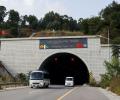
At least five Chinese nationals were among the six persons killed on Tuesday when an explosive-packed vehicle rammed into their bus in Pakistan's troubled northwestern province of Khyber-Pakhtunkhwa, officials said.
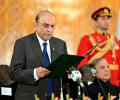
Pakistan's newly-elected President Asif Ali Zardari on Tuesday announced that he would not draw any salary during his tenure as part of his bid to help the cash-strapped country face the challenging economic hardship.
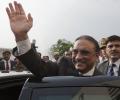
Asif Ali Zardari was overwhelmingly elected as the 14th President of Pakistan on Saturday, becoming the only civilian President of the coup-prone country for a second time.
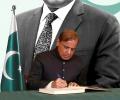
Shehbaz, 72, who was the consensus candidate of the Pakistan Muslim League-Nawaz (PML-N) and the Pakistan Peoples Party (PPP), received 201 votes, 32 more than what was required to become leader of the House in the 336-member Parliament.
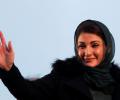
Senior Pakistan Muslim League-Nawaz (PML-N) leader Maryam Nawaz, the daughter of three-time former prime minister Nawaz Sharif, on Monday, became the first-ever woman chief minister of a province in Pakistan when she was elected to head the Punjab province, describing it as an 'honour' for every woman in the country.

In a breakthrough that could end the political uncertainty in Pakistan, the Pakistan Muslim League-Nawaz and the Pakistan Peoples Party have agreed on a power-sharing deal to form a new coalition government after intense negotiations following a fractured poll verdict.

Sources in the PML-N told the Press Trust of India in Lahore that Nawaz Sharif decided to withdraw himself from the race for the prime minister's office for his daughter and political heir, Maryam Nawaz, 50.

Shehbaz Sharif, the younger brother of former premier Nawaz Sharif, is expected to become Pakistan's new prime minister as the coalition of leading political parties led by them is set to comfortably cross the simple majority mark to form the next government after elections produced a split mandate.
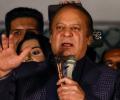
In a surprise development, Pakistan Muslim League-Nawaz on Tuesday nominated its president Shehbaz Sharif as the prime ministerial candidate of Pakistan instead of the party supremo and three-time former premier Nawaz Sharif.

Bilawal has said the reality is that his party does not have a mandate to form a federal government.
PML-N supremo Nawaz Sharif is still in the race for the prime ministerial slot despite his party not securing a simple majority in the Feb 8 general elections in Pakistan, some PML-N leaders said on Monday.
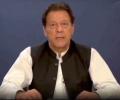
The Election Commission of Pakistan has announced that independent candidates, a majority of them supported by the PTI secured 101 seats, followed by Pakistan Muslim League-Nawaz (PML-N) with 75 seats, Pakistan Peoples Party (PPP) getting 54 seats, and Muttahida Qaumi Movement-Pakistan (MQM-P) bagging 17 seats.
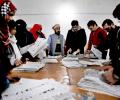
According to a report in the Dawn newspaper, 22 constituencies with a greater number of rejected votes than the margin of victory fell in Punjab, with one each in Khyber Pakhtunkhwa and Sindh province.
Wasim Qadir, the Pakistan Tehreek-i-Insaf (PTI)-backed candidate who defeated PML-N's stalwart Sheikh Rohail Asghar from Lahore's National Assembly-121 constituency, joined the PML-N after a meeting with Maryam Nawaz, daughter of the party supremo Nawaz Sharif, at her residence.
The three main political parties in Pakistan on Sunday intensified their efforts for the formation of a coalition government after it became clear that the coup-prone country faced a hung Parliament after general elections marred by allegations of rigging.

Pakistan's election commission on Sunday declared the final result of Thursday's general elections in which independent candidates backed by jailed former prime minister Imran Khan's party got the biggest piece of the cake by winning 101 seats.

A large number of Pakistan Tehreek-e-Insaaf candidates had contested as independents after the ECP had snatched the former prime minister Imran Khan-led party of its iconic cricket bat symbol.

Springing a surprise, independents backed by jailed former prime minister Imran Khan's Pakistan Tehreek-e-Insaf party won the lion's share of 101 seats in the National Assembly in Thursday's election.
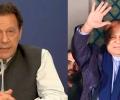
The announcement of results was delayed beyond normal, giving air to speculation about vote rigging.
